
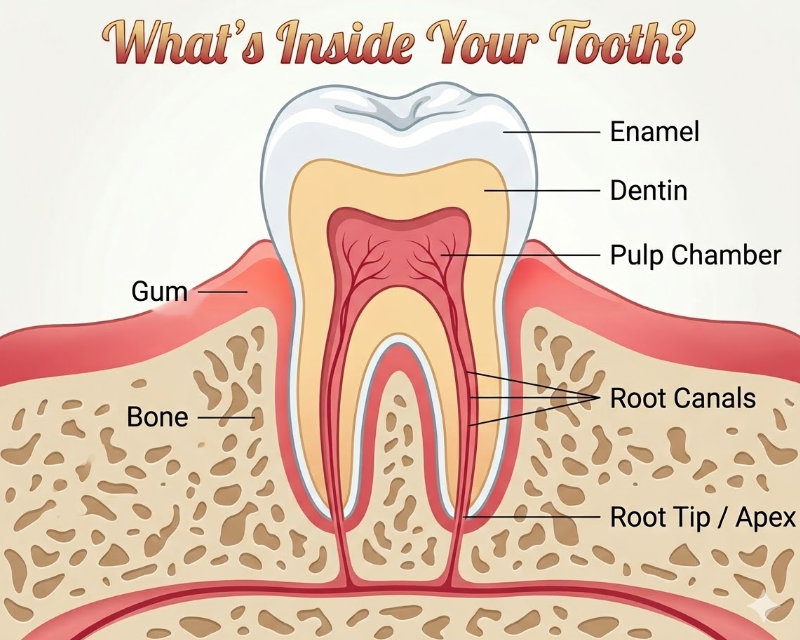
If your dentist has recommended a root canal, you are not alone — and there is no need to be alarmed. Root canal therapy is one of the most common dental procedures performed every day, and it is designed to relieve pain, not cause it. At Smile Brightly Dentistry in Warren, MI, our team helps patients from Warren, Sterling Heights, and Shelby Township understand their treatment options so they can move forward with confidence.
This guide will walk you through what root canal therapy is, why it may be necessary, what to expect during the procedure, and how to care for your tooth afterward.
What Is Root Canal Therapy?
Root canal therapy — sometimes called endodontic treatment — is a procedure used to save a tooth that has become severely infected or damaged on the inside. At the center of every tooth is a soft tissue called the pulp, which contains nerves, blood vessels, and connective tissue. When the pulp becomes infected or inflamed due to deep decay, a cracked tooth, or repeated dental procedures, it can cause significant pain and, if left untreated, lead to tooth loss or the spread of infection.
During a root canal, the infected pulp is carefully removed, the inside of the tooth is cleaned and disinfected, and the space is sealed to prevent further infection. In most cases, a crown is then placed over the tooth to restore its strength and appearance.
Signs You May Need Root Canal Therapy
Many patients are surprised to learn that a tooth requiring a root canal may not always cause obvious symptoms early on. However, there are several warning signs worth paying attention to:
- Persistent or severe toothache, especially when chewing or applying pressure
- Prolonged sensitivity to hot or cold temperatures, even after the source is removed
- Darkening or discoloration of the tooth
- Swelling or tenderness in the nearby gums
- A pimple-like bump on the gums near the affected tooth
- A chipped, cracked, or deeply decayed tooth
If you are experiencing any of these symptoms in Warren, Sterling Heights, or Shelby Township, it is important to schedule a dental exam as soon as possible. Early diagnosis can mean the difference between saving and losing a tooth.
What Causes the Pulp to Become Infected?
The pulp inside a tooth can become infected for several reasons. Understanding these causes can help you take steps to prevent the need for future treatment.
Deep Tooth Decay
When a cavity is left untreated for an extended period, bacteria can work their way through the outer layers of the tooth — the enamel and dentin — and eventually reach the pulp. This is one of the most common reasons patients need root canal therapy.
Cracked or Chipped Teeth
A crack or chip in a tooth, whether from an injury, biting down on something hard, or wear over time, can create a pathway for bacteria to enter the inner tooth structure. Even small cracks that are not visible to the naked eye can harbor bacteria.
Repeated Dental Procedures
Teeth that have undergone multiple dental procedures over the years may become more susceptible to pulp irritation, making them more vulnerable to infection.
Trauma to the Tooth
A blow to the face or a tooth injury — even one that does not result in a visible crack — can damage the pulp and lead to inflammation or infection over time.
What to Expect During Root Canal Therapy at Smile Brightly
One of the most common concerns patients have is that root canal therapy will be painful. The procedure is performed under local anesthesia, meaning the area around the tooth is completely numbed before any work begins. Most patients report that the experience is no more uncomfortable than having a routine filling placed.
Here is a step-by-step overview of what typically happens during a root canal appointment at our Warren, MI office:
Step 1: Examination and X-Rays
Before the procedure begins, your dentist will take X-rays to get a clear picture of the root canals and assess the extent of the infection. This helps guide treatment and ensures accuracy throughout the procedure.
Step 2: Local Anesthesia
A local anesthetic is applied to numb the tooth and the surrounding tissue. Once the area is fully numb, most patients feel little to no discomfort during the procedure itself.
Step 3: Accessing the Pulp
A small opening is made in the top of the tooth to allow access to the pulp chamber and root canals. A rubber dam is placed around the tooth to keep the area dry and saliva-free during treatment.
Step 4: Removing the Infected Pulp
Using specialized instruments, the dentist carefully removes the infected or damaged pulp tissue from inside the tooth and its root canals. The canals are then shaped to prepare them for filling.
Step 5: Cleaning and Disinfecting
The inside of the tooth is thoroughly cleaned and disinfected to remove any remaining bacteria and prevent reinfection.
Step 6: Filling and Sealing
The cleaned canals are filled with a biocompatible rubber-like material called gutta-percha and sealed with an adhesive cement. The opening at the top of the tooth is then temporarily or permanently sealed.
Step 7: Crown Placement
In most cases, a dental crown is recommended to protect and strengthen the treated tooth. Your dentist will discuss the timing and process for placing a crown at a follow-up appointment.
Recovery: What to Expect After Your Root Canal
Most patients can return to their normal daily activities the same day as or the day after their root canal. It is normal to experience some mild soreness or sensitivity in the treated area for a few days following the procedure. Over-the-counter pain relievers are typically sufficient to manage any discomfort.
Here are a few tips to support a smooth recovery:
- Avoid chewing on the treated tooth until the permanent crown is placed
- Stick to soft foods for the first day or two if you are experiencing sensitivity
- Maintain your regular oral hygiene routine, including brushing and flossing
- Contact your dentist if pain worsens significantly or if swelling develops
Serious complications following root canal therapy are rare, and the procedure has a high success rate. With proper care and a timely crown, a treated tooth can last a lifetime.
The Consequences of Skipping Treatment
It can be tempting to delay or avoid a recommended root canal, especially if the pain has temporarily subsided. However, a dental infection does not resolve on its own. Without treatment, the infection can spread to surrounding teeth, the jawbone, and even other areas of the body. In some cases, a severe dental infection can become a serious medical emergency.
Beyond the health risks, avoiding treatment often leads to tooth loss, which then requires more extensive and costly restorative options such as dental implants, bridges, or dentures. Saving your natural tooth through root canal therapy is almost always the more affordable and preferable long-term solution.
Root Canal Therapy vs. Tooth Extraction: Which Is Better?
Patients sometimes ask whether it is better to have a tooth extracted rather than undergo root canal therapy. In most situations, preserving your natural tooth is the preferred option for several important reasons:
- Natural teeth function better than artificial replacements for chewing and speaking
- Keeping your tooth helps maintain the alignment of the surrounding teeth
- It prevents bone loss in the jaw that can occur after extraction
- It avoids the need for more involved and costly tooth replacement options
There are cases where extraction may be the only viable option — for example, if the tooth is too severely damaged to be restored. Your dentist at Smile Brightly will carefully evaluate your situation and walk you through your options so you can make an informed decision.
Serving Patients in Warren, Sterling Heights, and Shelby Township
Smile Brightly Dentistry is proud to serve patients throughout Macomb County, including those from Sterling Heights and Shelby Township. Whether you are dealing with a dental emergency or seeking routine care, our team is here to provide compassionate, high-quality treatment in a comfortable environment.
If you have been told you may need root canal therapy, or if you are experiencing tooth pain and want to find out what is causing it, we encourage you to schedule an appointment at our Warren, MI office. Our experienced dental team will evaluate your tooth, explain your options in plain language, and work with you every step of the way.
Schedule Your Root Canal Consultation in Warren, MI
Do not wait for tooth pain to get worse. Smile Brightly Dentistry is conveniently located at 11270 E Thirteen Mile Rd, Suite 1a, Warren, MI 48093. We welcome new patients and are here to help you protect and restore your smile.
Call us today at 586-573-7700 or visit smilebrightlywarren.com to request your appointment